
Portable Sanitation Solutions for Oklahoma's Oil & Gas Industry
Oklahoma's oil and gas industry operates in some of the most remote, demanding environments in the state. Drill sites sit miles from the nearest town, crews work around the clock in 12-hour shifts, and weather swings from 110°F summer heat to ice storms that shut down county roads. Keeping workers safe, healthy, and OSHA-compliant starts with one of the most basic needs on any jobsite: clean, accessible portable restrooms. Here is how Brower Inc. solves the sanitation challenge for Oklahoma's energy sector.
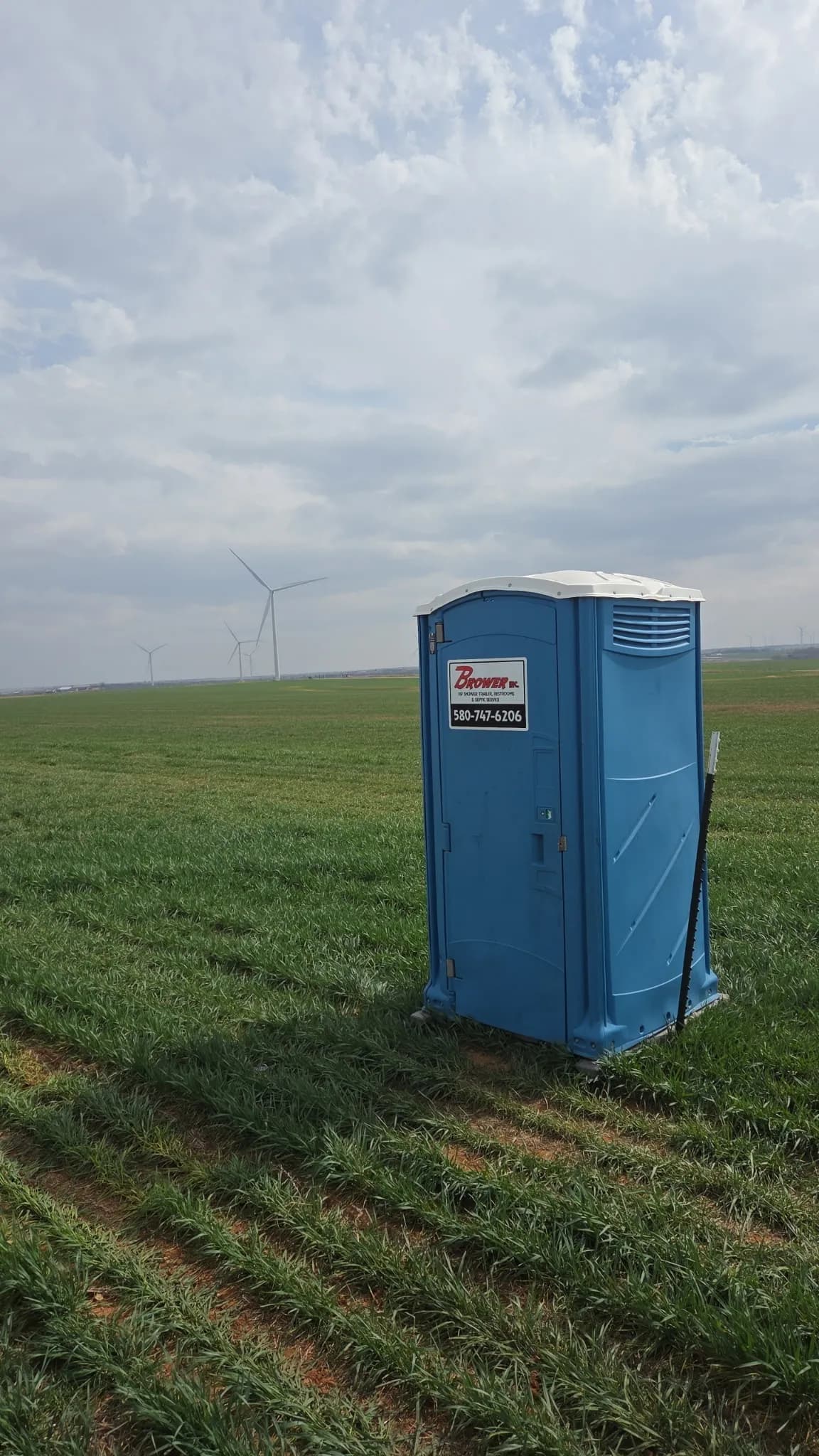
Why Oil & Gas Sites Need Specialized Portable Sanitation
Oil field portable restrooms in Oklahoma face conditions that standard event or residential rentals never encounter. A drill pad on a lease road 40 miles from the nearest gas station is not the same as a weekend festival in a city park. The sanitation provider you choose has to understand these differences — and plan for them.
Here are the realities that make oil and gas sanitation a specialized service:
- Remote locations: Drill sites in Kay County, Grant County, Osage County, and Noble County are often 20 to 50 miles from the nearest service depot. Some well pads are accessible only via unpaved lease roads that become impassable after rain or ice.
- 24/7 operations: Drilling rigs run two 12-hour shifts — day tour and night tour. That means portable restrooms see continuous use, not just during business hours. A unit that would last a week on a standard construction site can fill in three to four days on a 24-hour drill site.
- Extreme weather exposure:Oklahoma's oil patch experiences temperature swings from well over 100°F in July to below 10°F in January. Units need chemical formulations that work in both extremes, and tanks must be treated with antifreeze compounds during winter months to prevent freeze-ups that render restrooms unusable.
- Multiple crews and contractors: A typical drilling operation involves the drilling contractor, mud logging company, wireline crew, casing crew, and various service companies cycling through the location. At peak activity, 30 to 50 workers may be on site simultaneously — far more than the 15-person drilling crew alone.
- Safety-sensitive environments: Oil field sites have restricted areas, H2S monitoring zones, and strict traffic management plans. Restroom placement and service vehicle access must be coordinated with the site safety team — you cannot just drop a unit anywhere.
OSHA Requirements for Oil Field Portable Restrooms
Oil and gas operations fall under the same OSHA construction sanitation standard — 29 CFR 1926.51(c) — that governs every other construction site in the country. There is no oil field exemption. The standard requires one toilet for every 20 workers, facilities must be readily accessible, and they must be maintained in a sanitary condition.
But drilling sites introduce additional safety and compliance layers that standard construction site sanitation does not typically involve:
- H2S (hydrogen sulfide) considerations: On sites with known H2S exposure risk, portable restroom placement must account for wind direction and safe standoff distances from wellheads, separators, and flowback equipment. Workers in H2S zones must be able to reach restroom facilities without removing respiratory protection prematurely.
- Hazmat and chemical exposure: Crews handling drilling fluids, cement, and chemical additives need hand washing access that goes beyond basic OSHA requirements. A portable hand washing station with running water and soap is not just an OSHA box to check — it protects workers from chemical burns and dermatitis from prolonged skin contact with drilling mud and completion fluids.
- Shift-change peak loads: When two 12-hour shifts overlap during crew change, restroom demand spikes dramatically. Sites that seem adequately equipped during normal operations can have workers waiting in line during the 30-minute changeover window. OSHA calculates the required number of units based on the maximum number of workers on site at any one time — including shift overlap periods.
- Site access for service vehicles: OSHA requires facilities to be maintained in sanitary condition, which means your service provider needs reliable vehicle access to reach and pump units. On oil field sites with security gates, cattle guards, and controlled-entry policies, this has to be coordinated in advance.
| Workers on Site (Peak Shift) | OSHA Minimum | Recommended for 24/7 Drilling |
|---|---|---|
| 1–20 | 1 | 2–3 (continuous use) |
| 21–40 | 2 | 4 (shift overlap buffer) |
| 41–60 | 3 | 5–6 (multiple service companies) |
| 60+ | 1 per 20 workers | 1 per 12–15 workers |
OSHA fine reminder
In 2026, OSHA serious violations carry fines up to $16,550 per violation. On a drill site with 40 workers and only one portable restroom, an inspector could cite you for the missing unit — that is a five-figure fine for a rental that costs a fraction of the penalty each month.
Oklahoma-Specific Challenges for Oil Field Sanitation
Providing drilling site portable toilets in Oklahoma is not the same as supplying units in the Permian Basin or the Bakken. The state's geography, climate, and infrastructure create a unique set of challenges that only a local provider truly understands.
Distance from service depots
Oklahoma's oil and gas activity is spread across the northern and central parts of the state. Well pads in Osage County, Grant County, and the Anadarko Basin can be 30 to 60 miles from the nearest sanitation service provider. A provider based in Oklahoma City may not service sites in Kay County efficiently. Brower Inc. operates from Newkirk — right in the heart of northern Oklahoma's oil patch.
Unpaved lease roads
Most Oklahoma drill sites are accessed via unimproved lease roads — gravel, caliche, or bare dirt. After a spring thunderstorm or winter ice event, these roads can become rutted, muddy, or completely impassable. Service trucks need heavy-duty suspension and experienced drivers who know when to chain up and when to wait.
High wind exposure
Oklahoma is one of the windiest states in the country. Sustained winds of 25 to 40 mph are common on open drill pads, and gusts during severe weather can exceed 60 mph. Portable restrooms must be anchored or weighted to prevent tip-overs. Brower Inc. uses tie-down stakes and concrete ballast blocks on high-wind sites.
Summer heat above 100°F
From June through September, Oklahoma oil field temperatures regularly exceed 100°F. Heat accelerates chemical breakdown in holding tanks, increases odor, and drives higher worker water consumption (which means more restroom visits). Summer sites need more frequent service and stronger deodorizing treatments.
Winter ice and freeze-ups
January and February bring ice storms that coat roads and equipment. Holding tank chemicals can freeze if not properly treated, rendering restrooms unusable at the worst possible time. Brower Inc. switches to winter-grade chemical formulations starting in November and adds antifreeze agents to every tank.
Cattle guards and locked gates
Most Oklahoma lease roads cross ranch land with cattle guards, locked gates, and restricted access points. Service drivers need gate codes, landowner contacts, and familiarity with rural road networks. A provider from out of the area will lose hours navigating access — a local provider already knows the routes.
Types of Portable Restroom Units for Oil Field Operations
Not every oil field site needs the same equipment. The right mix of units depends on crew size, shift structure, site layout, and how long the operation will last. Here is what Brower Inc. deploys to drilling sites, completion pads, and production facilities across Oklahoma:
Standard Portable Restrooms
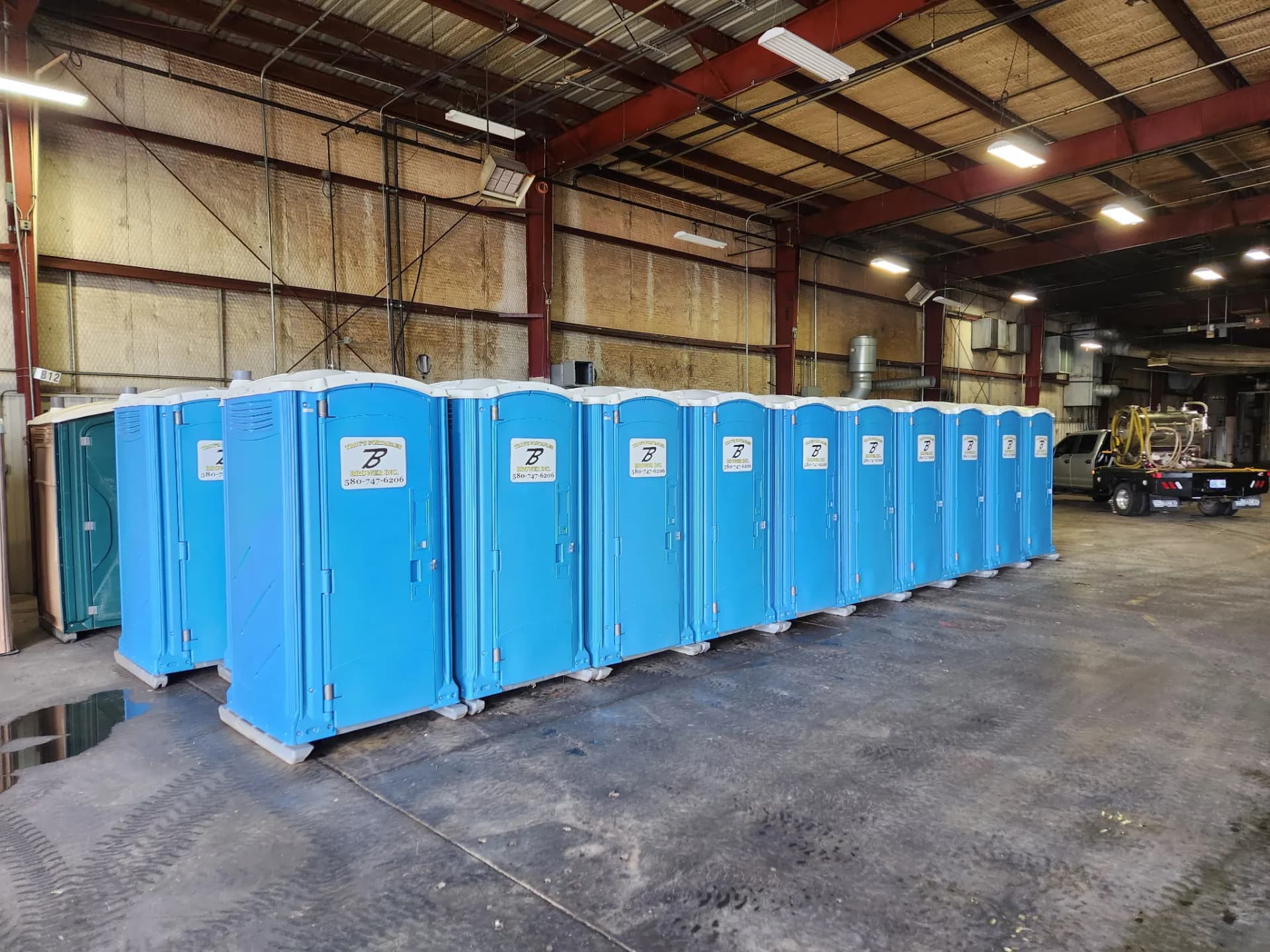
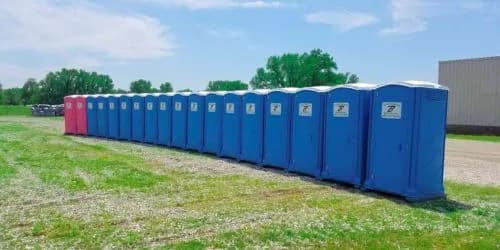
The workhorse of any oil field sanitation setup. Our standard portable restrooms (the Maxim 300 model) are the units you will see on every active drill pad and well site in Oklahoma. They feature a 60-gallon holding tank, ventilation stack, interior coat hook, and built-in hand sanitizer dispenser. These units handle the bulk of daily crew use and are sized to be transported on flatbed trailers to remote locations.
- Ideal for drilling pads, completion sites, and production battery locations
- Tank capacity supports 10 to 15 workers per unit with weekly service
- Available in blue, tan, and pink (the area favorite for charity and awareness events)
ADA-Compliant Units
OSHA and the Americans with Disabilities Act require accessible restroom facilities if any worker on site has a mobility impairment. Even if your current crew does not include anyone needing ADA accommodation, subcontractors and service companies rotate through oil field sites regularly. Having at least one ADA-compliant unit on location is a best practice that avoids compliance scrambles.
- Wider interior (60" x 60" minimum) with wheelchair ramp access
- Grab bars, lower seat height, and accessible door hardware
- Recommended: one ADA unit per drill site regardless of current crew needs
Hand Washing Stations
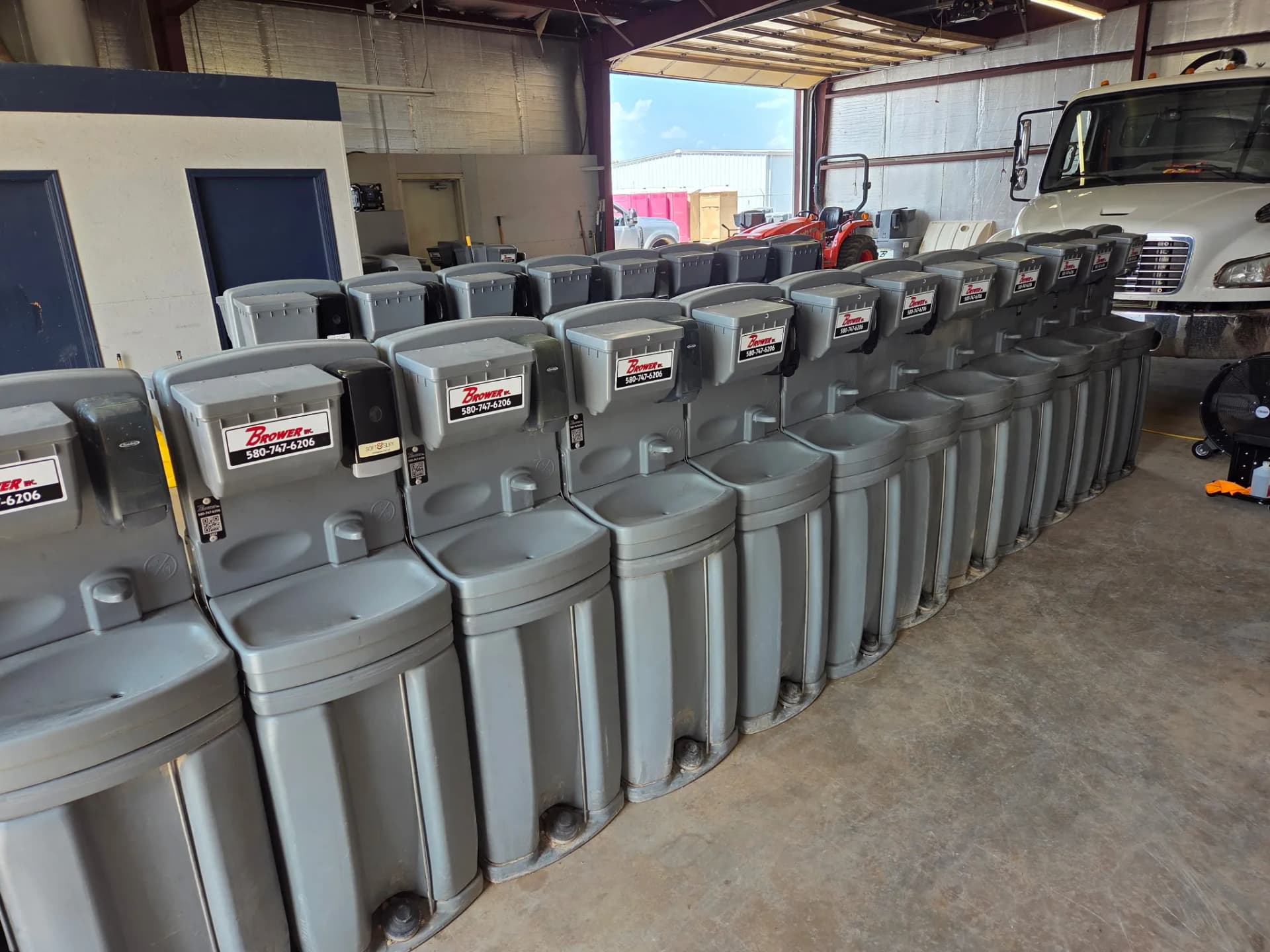
OSHA standard 1926.51(f) mandates hand washing facilities with running water and soap on all construction sites — and oil field sites are no exception. Portable hand washing stations are especially critical on drilling and completion sites where workers handle drilling fluids, cement slurry, and chemical additives that can cause skin irritation or chemical burns.
- Fresh water reservoir with foot-pump operation — no external water hookup needed
- Soap, paper towels, and hand sanitizer included with every delivery
- Paired with restroom clusters to satisfy OSHA hand washing requirements
Need oil field portable restrooms in Oklahoma?
OSHA-compliant units, hand washing stations, and flexible long-term programs — delivered to your drill site and serviced on schedule.
How Brower Inc. Services Remote Oil Field Locations
The biggest complaint oil and gas companies have about portable sanitation providers is reliability. A missed service visit on a remote drill site does not just mean an unpleasant restroom — it can mean an OSHA violation, a worker complaint, and a stalled operation while the crew waits for someone to show up.
Brower Inc. operates from Newkirk, Oklahoma — positioned in the center of northern Oklahoma's most active oil and gas producing counties. Here is how we maintain reliable service to sites that other providers struggle to reach:
- Route planning around rig operations: We schedule service visits during daylight hours and coordinate with your company man or pusher to avoid arriving during critical operations like tripping pipe, running casing, or cementing. Our drivers check in with the site contact before entering the location.
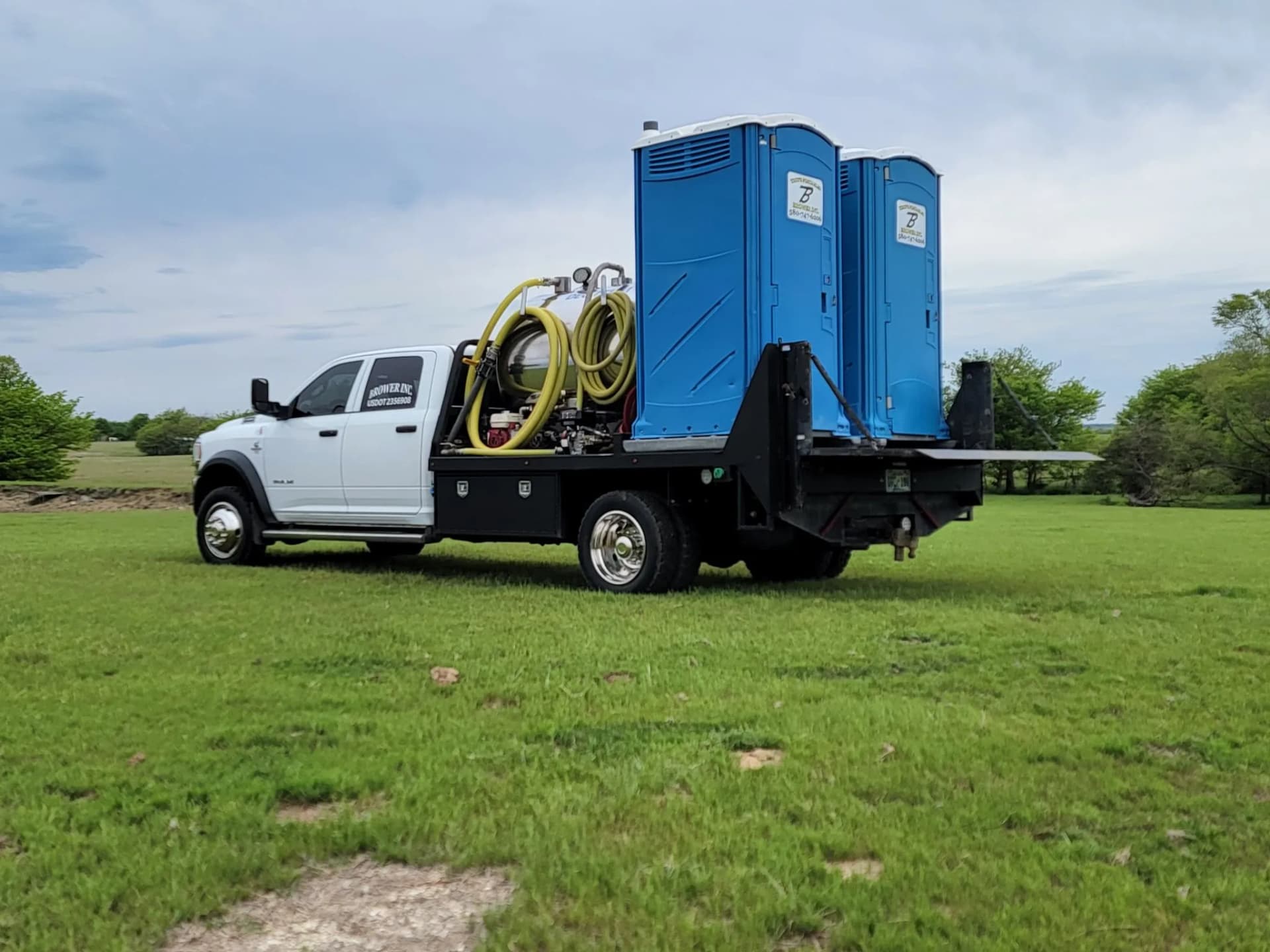
- Heavy-duty service trucks: Our pump trucks are built for rural Oklahoma roads — four-wheel-drive capable, high-clearance, and equipped with all the hose length needed to reach units placed deep inside a drill pad without driving heavy equipment across the location.
- Gate codes and access coordination: We maintain a database of gate codes, landowner contacts, and access instructions for every active site we service. Your foreman gives us the information once, and every driver on our team has it for every visit.
- Weather contingency plans: When ice or mud makes a lease road impassable, we do not just skip the visit. We communicate with your site contact, monitor road conditions, and reschedule within 24 hours of the road becoming passable. Our drivers know these roads — they know which ones drain fast and which ones stay muddy for days.
- Service documentation: Every service visit is logged with date, time, driver name, and services performed. For oil and gas clients who need compliance documentation for audits or inspections, we provide service records on request.
Long-Term Rental Solutions for Multi-Month Drilling Projects
A single horizontal well in Oklahoma can take 30 to 90 days to drill and complete. Multi-well pad programs run six months to a year. Pipeline construction projects stretch across entire counties over the course of a season. Short-term rental pricing does not make sense for these timelines — and neither does managing a new delivery for every project phase.
Brower Inc.'s long-term rental program is designed specifically for the oil and gas industry's extended project timelines:
- Monthly billing: Flat monthly rate that includes weekly servicing, chemical recharge, and all consumables (toilet paper, hand sanitizer, soap). No surprise fees for routine maintenance.
- Flexible scaling: Starting with 3 units for the spud phase but need 6 when the completion crew arrives? Call us and we will add units within 24 to 48 hours. Scaling back down when crews demobilize is just as easy.
- Rig-move coordination: When you move the rig to the next well on the pad or to a new location entirely, we pick up, service, and redeploy your units to the new site. No extra mobilization fees within our service area.
- Dedicated account management: Oil and gas clients get a direct contact at Brower Inc. — not a call center. When you need to add units, change service days, or coordinate a rig move, you call the same person every time.
- Volume pricing: Multi-unit and multi-month commitments qualify for discounted rates. The longer the project and the more units you need, the more competitive the pricing becomes. Call (580) 747-6206 for a custom quote.
Multi-well pad example
A typical 4-well horizontal pad program in northern Oklahoma runs 6 to 8 months from spud to final completion. During that time, crew sizes fluctuate from 15 during drilling to 50+ during simultaneous completions. Brower Inc. manages the entire sanitation program — scaling units up and down as crews change — on a single monthly contract.
Wind Farm and Pipeline Construction Sanitation
Oklahoma is not just oil and gas. The state ranks third in the nation for wind energy production, and the wind farm construction boom shows no signs of slowing. Pipeline construction — gathering lines, transmission lines, and midstream infrastructure — keeps pace with drilling activity. Both of these sectors create sanitation challenges that are similar to oil field work but with their own twists.
Wind Farm Construction Sites
Wind farm projects spread across thousands of acres. A single wind farm may have 50 to 200 turbine pads spread across a 10-mile area, with construction crews working on multiple pads simultaneously. Portable restrooms need to be distributed across the site — not clustered in one location — so workers at every active pad have accessible facilities within OSHA's “readily accessible” standard.
- Units deployed in clusters of 2 to 3 at active turbine pad groups, moved as construction progresses across the site
- Extra anchoring required — wind farm sites are, by definition, the windiest locations in the state
- Long project timelines (12 to 18 months) make monthly long-term rental programs the most cost-effective option
- Brower Inc. services multiple active wind farm projects across northern Oklahoma and southern Kansas
Pipeline Construction
Pipeline construction is a linear operation — the work front moves forward every day, and the restrooms have to move with it. A 20-mile gathering line project does not need 20 miles of portable restrooms on day one. It needs a leapfrog strategy where units are picked up from completed sections and redeployed ahead of the active work front.
- Units repositioned weekly or bi-weekly to follow the construction spread
- Right-of-way access requires coordination with landowners and the pipeline company's ROW agent
- Multiple crews (clearing, trenching, welding, backfill) need restroom access at different points along the route simultaneously
- Brower Inc. manages the relocation logistics so your project manager does not have to

Written by Troy Brower
Founder & Owner, Brower Inc.
Troy has spent years providing portable sanitation to oil field operations, wind farm construction, and pipeline projects across Oklahoma and southern Kansas. From single-well pads in Kay County to multi-well programs spanning three counties, he knows what it takes to keep remote jobsites clean, compliant, and running without sanitation delays.
Frequently Asked Questions
Common questions from oil and gas companies, drilling contractors, and energy-sector project managers about portable sanitation in Oklahoma.
Brower Inc. delivers portable restrooms to oil field and drilling sites across a 14-county service area covering northern Oklahoma and southern Kansas. We routinely deliver to remote well pads and drill sites 30 to 60 miles from our Newkirk depot. If your site is within our coverage area, distance is never an issue — we have the trucks and route planning to reach you on schedule every time.